
Imagine walking into your kitchen and plucking fresh basil for your pasta, snipping rosemary for roasted potatoes, or adding vibrant mint leaves to your tea—all from your very own herb garden. Now, picture doing this year-round, regardless of the season or limited space. Thanks to the rise of kitchen herb garden ideas in 2025, turning your culinary space into a lush, green haven has never been easier or more stylish.
In recent years, the trend of integrating herb gardens into kitchens has exploded. With people seeking fresher, more sustainable cooking options, home chefs are embracing indoor herb gardens that are both functional and decorative. Whether you live in a tiny apartment or a spacious house, there’s a kitchen herb garden idea perfect for your space and budget.
But starting a herb garden can seem daunting—what herbs should you grow? How do you set it up without turning your kitchen into a jungle? That’s where this guide comes in. We’ll explore 15 trending kitchen herb garden ideas that will inspire you to create your own green oasis, making your cooking more flavourful, healthy, and fun.
Table of Contents
- Why Kitchen Herb Gardens Are Trending
- Best Herbs for Kitchen Gardens
- 15 Trending Kitchen Herb Garden Ideas
- Setup and Design Guide
- Care and Maintenance
- Conclusion
- FAQs
Why Kitchen Herb Gardens Are Trending
In 2025, kitchen herb garden ideas are more popular than ever—and for good reason. They blend style, health benefits, and practicality into one compact package, transforming your cooking experience.
Cost Savings and Freshness
Growing your herbs at home drastically reduces grocery bills and ensures you always have fresh, organic herbs at your fingertips. According to recent statistics, a small kitchen herb garden can save you up to $200 annually on store-bought herbs. Plus, fresh herbs retain more nutrients and flavor, elevating your dishes.
Health and Wellness Benefits
Herbs like basil, mint, and parsley are rich in antioxidants and vitamins. Incorporating homegrown herbs into your meals can boost immunity and improve digestion. Plus, tending to your herb garden offers therapeutic benefits, reducing stress and promoting mindfulness.
Sustainability and Eco-Friendliness
Indoor herb gardening reduces reliance on plastic packaging and minimizes food miles. Many DIY herb garden setups use recycled containers, aligning with eco-conscious lifestyles. Plus, growing herbs indoors conserves water and energy compared to outdoor gardening.
Aesthetic Appeal and Social Media Influence
Beautiful herb displays are trending on platforms like Instagram and Pinterest. An eye-catching kitchen gardening setup can add a fresh, modern look to your space. Sharing your herb garden journey also inspires others and builds a vibrant gardening community.
The Growing Popularity of Indoor Gardening
With more people working from home, indoor herb gardens provide a green escape right in your kitchen. They’re easy to maintain and require minimal space, making them ideal for urban dwellers and apartment residents.
Best Herbs for Kitchen Gardens
Not all herbs are created equal in terms of ease of growth, culinary versatility, and space requirements. Here’s a quick guide to best herbs for kitchen garden setups, categorized by difficulty.
Easy Herbs (Perfect for Beginners)
- Basil: Needs warmth and plenty of sunlight; perfect for pasta and salads.
- Mint: Thrives in moist soil; great for teas and desserts.
- Parsley: Tolerates partial shade; versatile in many dishes.
- Chives: Very hardy; adds flavor to soups and eggs.
Moderate Difficulty Herbs
- Cilantro: Needs cooler temperatures; ideal for salsas and garnishes.
- Thyme: Requires well-drained soil; pairs well with meats and vegetables.
- Oregano: Needs full sun; essential for Italian cooking.
- Dill: Prefers cooler weather; great for pickles and fish dishes.
Advanced Herbs
- Lavender: Needs excellent drainage and full sun; mainly for aromatherapy and garnishing.
- Rosemary: Requires well-drained soil and lots of sun; excellent with roasted dishes.
- Sage: Likes dry soil; versatile in stuffing and sauces.
- Lemongrass: Needs warm temperatures; ideal for Asian cuisines.
| Herb | Difficulty | Light Needs | Culinary Uses | Space Requirement |
|---|---|---|---|---|
| Basil | Easy | Full sun | Pesto, salads, sauces | Small pot |
| Mint | Easy | Partial sun | Mojitos, teas, desserts | Spreads, use separate pot |
| Parsley | Easy | Partial sun | Garnishes, soups, salads | Small pot |
| Chives | Easy | Full sun | Eggs, dips, potatoes | Small pot |
| Cilantro | Moderate | Full sun | Salsa, curries, tacos | Medium pot |
| Thyme | Moderate | Full sun | Roasts, stews, breads | Small pot |
| Oregano | Moderate | Full sun | Pizza, pasta, marinades | Small pot |
| Rosemary | Moderate | Full sun | Roasts, focaccia, oils | Medium pot |
| Sage | Moderate | Full sun | Stuffing, meats, teas | Medium pot |
| Dill | Moderate | Full sun | Pickles, fish, salads | Small pot |
| Tarragon | Advanced | Full sun | Sauces, chicken, eggs | Medium pot |
| Bay Laurel | Advanced | Full sun | Soups, stews, stocks | Large pot |
Growing Tips and Culinary Uses
Most herbs thrive with 4-6 hours of sunlight daily, well-draining soil, and regular watering. For example, basil loves warmth and moist soil, making it ideal for sunny windowsills, while rosemary prefers drier conditions and full sun.
15 Trending Kitchen Herb Garden Ideas
Now, let’s dive into the kitchen herb garden ideas that are taking 2025 by storm. Each concept offers a unique way to bring fresh herbs into your space, tailored to different budgets, styles, and space constraints.
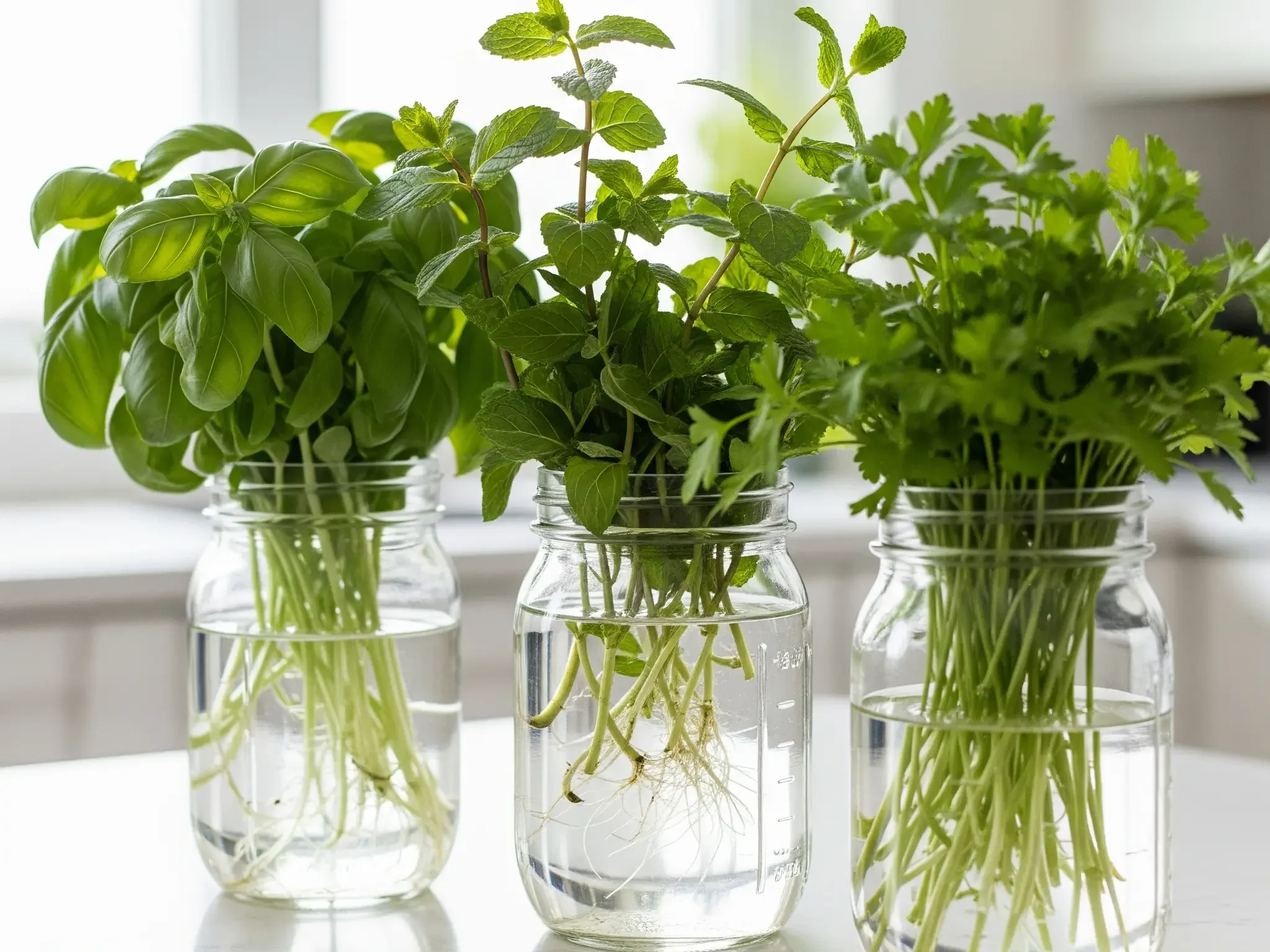
1. Hydroponic Mason Jar Systems
StatusHow to start a Organic Hydroponics Gardening
2. Vertical Wall Gardens
Install a vertical garden panel or wall-mounted planters to maximize space. Ideal for narrow kitchens or apartment balconies, this herb garden design allows up to 20 herbs in a small footprint. Plus, it adds a lush aesthetic.
Image idea: Green wall with herbs growing vertically.
Alt text: Vertical wall herb garden in modern kitchen.
3. Kitchen Island Herb Stations
Transform your kitchen island into a dedicated herb station with built-in planters or trays. This DIY herb garden idea makes harvesting easy and keeps herbs front and center for cooking.
Image: Kitchen island with integrated herb containers.
Alt text: Kitchen island herb garden setup.
4. Smart Garden Technology
Invest in smart indoor gardening systems like Click and Grow or AeroGarden that automate watering and lighting. Perfect for busy lifestyles, these systems can grow herbs like basil, parsley, and mint in 2-3 weeks.
Image: Modern smart garden unit with herbs.
Alt text: Indoor smart herb garden technology.
5. Window Shelf Gardens
Utilize sunny window sills with tiered or floating shelves. This window shelf herb garden is easy to set up, cost-effective, and offers plenty of sunlight for thriving herbs.
Image: Windowsill with herb pots arranged on shelves.
Alt text: Indoor window shelf herb garden.
6. Hanging Basket Displays
Suspend baskets filled with herbs like thyme and oregano from the ceiling or hooks. This hanging herb garden saves counter space and adds visual interest.
Image: Hanging baskets with herbs.
Alt text: Hanging herb garden display.
7. Drawer Herb Gardens
Repurpose kitchen drawers with drainage holes as mini-greenhouses. Line with soil, add herbs, and place in a sunny spot for a charming, space-efficient drawer herb garden.
Image: Drawer filled with herbs and soil.
Alt text: DIY drawer herb garden.
8. Countertop Greenhouses
Small, glass countertop greenhouses provide controlled environments for herbs like basil and cilantro, especially useful in colder climates or seasons.
Image: Compact greenhouse on kitchen counter.
Alt text: Indoor countertop herb greenhouse.
9. Repurposed Container Gardens
Use recycled cans, teapots, or wooden boxes to create an eco-friendly DIY herb garden. Personalize containers with paint or labels for added style.
Image: Colorful recycled containers with herbs.
Alt text: Recycled container herb garden.
10. Magnetic Herb Systems
Attach magnetic planters to your refrigerator or metal surfaces. This magnetic herb system makes harvesting a breeze and keeps herbs visible and accessible.
Image: Magnetic planters on fridge door.
Alt text: Magnetic herb garden on refrigerator.
11. Under-Cabinet Growing Stations
Install LED grow lights underneath cabinets or shelves. Ideal for herbs like chives and parsley, this under-cabinet herb garden keeps your herbs within arm’s reach.
Image: Under-cabinet LED grow lights with herbs.
Alt text: Under-cabinet herb growing station.
12. Kitchen Cart Herb Gardens
Use a rolling cart with shelves or baskets for a portable herb garden. Perfect for small spaces or for moving herbs outdoors in summer.
Image: Kitchen cart with potted herbs.
Alt text: Portable kitchen cart herb garden.
13. Terrarium-Style Gardens
Create a miniature indoor ecosystem with glass terrariums filled with herbs like basil and mint. They fit on countertops or shelves and add a decorative touch.
Image: Glass terrarium with herbs.
Alt text: Indoor herb terrarium.
14. Ladder Shelf Displays
Leverage vertical space with a leaning ladder shelf dedicated to herb pots. This herb garden design combines practicality and aesthetic appeal.
Image: Wooden ladder shelf with herb pots.
Alt text: Ladder shelf herb garden display.
15. Seasonal Transition Systems
At last but not the least you can use a modular planters and removable containers to rotate your herbs seasonally. This adaptable kitchen gardening approach will ensures fresh herbs year-round.
Image: Modular herb containers for seasonal planting.
Alt text: Seasonal herb garden in kitchen.
Setup and Design Guide
Here’s a step-by-step guide for getting started with your kitchen herb garden ideas.
Space Assessment Tips
- Measure available space: countertops, windowsills, wall area.
- Decide on the amount of sunlight your space receives.
- Consider airflow and humidity levels.
Container Selection Advice
- Use containers with drainage holes to prevent waterlogging.
- Choose materials that complement your kitchen decor—ceramic, wood, or recycled cans.
- Label containers for easy identification.
Soil and Lighting Requirements
- Use high-quality potting soil with good drainage.
- Herbs typically need 4-6 hours of direct sunlight daily.
- Supplement with grow lights if natural light is limited.
Budget Considerations
- Start small with inexpensive containers and DIY setups.
- Invest gradually in smart systems or custom-built gardens.
- Look for deals on supplies during seasonal sales.
Care and Maintenance
Proper care ensures your indoor herb garden thrives:
Watering Schedules
- Water when the top inch of soil feels dry.
- Avoid overwatering to prevent root rot.
- Use a spray bottle for delicate herbs like basil.
Harvesting Techniques
- Use sharp scissors to snip herbs just above a leaf node.
- Regular harvesting encourages bushier growth.
- Leave enough foliage for continued growth.
Common Problem Solutions
- Wilting: Check watering and light.
- Yellowing leaves: Could indicate overwatering or nutrient deficiency.
- Pests: Use organic pest control methods like neem oil.
Seasonal Care Tips
- Bring outdoor herbs inside before frost.
- Rotate herbs to prevent disease.
- Adjust watering frequency based on season.
Conclusion
Creating a kitchen herb garden in 2025 is a rewarding way to elevate your cooking, save money, and add beauty to your space. Whether you choose a simple window shelf garden or a high-tech smart garden, starting small and scaling up is key. With the right herb garden design, proper setup, and regular care, you’ll enjoy fresh herbs all year long.
Begin your herb gardening journey today—your taste buds and your kitchen will thank you!
FAQs
Q: How much does it cost to start a kitchen herb garden?
A: Starting a basic herb garden can cost as little as $20 for containers and soil. More advanced setups like smart gardens may be $50–$200.
Q: What are the best herbs for small spaces?
A: Mint, basil, parsley, and chives are excellent choices due to their manageable size and high culinary value.
Q: How often should I water my indoor herbs?
A: Typically once every 2-3 days, depending on the herb, container size, and indoor conditions.
Q: Can I grow herbs without direct sunlight?
A: Yes, with grow lights or by placing herbs in bright, indirect light areas.
Q: How do I prevent pests in my indoor herb garden?
A: Use organic pest control, keep the area clean, and ensure proper air circulation.
Ready to Grow?
Share your herb garden photos with us on social media using #KitchenHerb2025!
Internal Link Suggestions:
- Link to a detailed guide on how to start a kitchen herb garden
- Recommend related content on best herbs for indoor gardening
- Connect to product reviews for kitchen herb garden containers
External Link Suggestions:
- National Gardening Association for expert tips
- Royal Horticultural Society for plant care advice
This comprehensive guide aims to inspire you to create your own kitchen herb garden ideas. Happy gardening!