
Table of Contents
Introduction
Welcome to the world of hydroponic gardening! If you want to grow fresh, flavorful herbs and nutrient-packed microgreens indoors, hydroponics is your answer. This soilless method is booming in popularity because it saves space, uses up to 90% less water, and grows plants up to 50% faster than traditional soil gardening.
Whether you’re a beginner, an urban gardener, or a chef wanting fresh flavors at your fingertips, this guide will walk you through everything you need to know to succeed with herbs and microgreens using hydroponics.
What is Hydroponics?
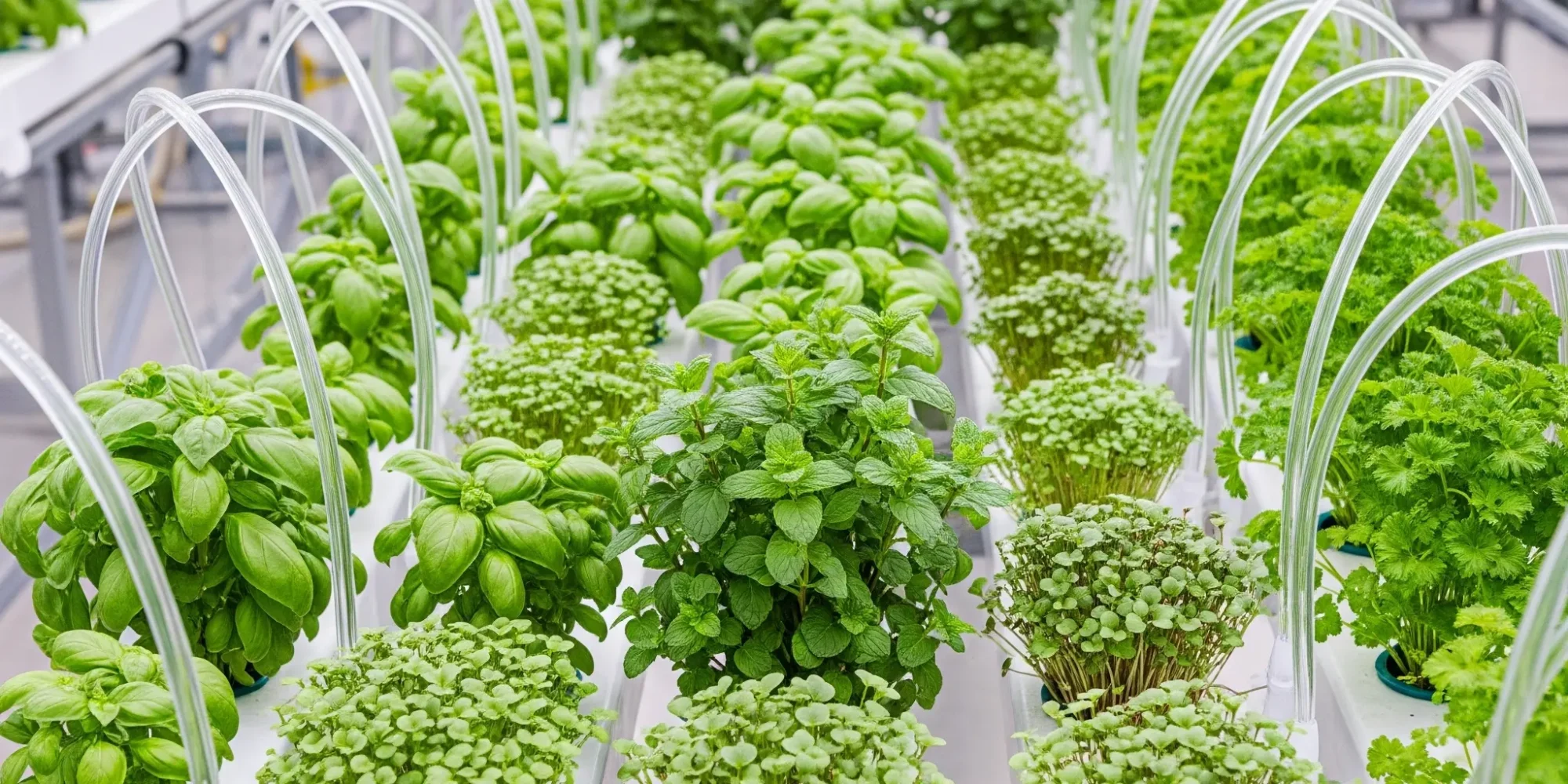
Hydroponics is a method of growing plants without soil. Instead, plants are grown in water that’s enriched with a perfectly balanced mix of nutrients. The roots absorb everything they need directly from the water, making the process highly efficient and clean.
Common Types of Hydroponic Systems
Deep Water Culture (DWC)
Plants float on a raft with their roots submerged in oxygenated nutrient solution. Simple and perfect for beginners.
Nutrient Film Technique (NFT)
A thin film of nutrient solution flows over the roots in sloped channels. Great for herbs and microgreens.
Kratky Method
A passive, electricity-free system where plants grow in a static nutrient solution. Ideal for small setups.
Ebb and Flow
Grow beds are periodically flooded with nutrients and then drained. Versatile for a range of plants.
In hydroponics, plants focus on growing leaves and stems instead of searching for nutrients in the soil. This leads to faster, healthier growth and fewer problems with pests or diseases.
Why Grow Herbs and Microgreens with Hydroponics?
Faster Growth
Plants grow up to 50% faster than in soil thanks to direct nutrient delivery.
Water Efficient
Hydroponic systems use up to 90% less water than traditional gardening.
Year-Round Harvests
Grow indoors, regardless of season or weather.
No Soil Mess
Enjoy a clean, soilless system with fewer pests and diseases.
Higher Yields
Controlled environments mean more productive plants.
Space Saving
Vertical and compact systems maximize your growing area.
Perfect for Modern Lifestyles
- Urban gardeners with limited outdoor space
- Kitchen chefs wanting fresh herbs at hand
- Small businesses supplying local restaurants
- Health enthusiasts seeking nutrient-dense microgreens
- Apartment dwellers without garden access
Best Herbs and Microgreens to Grow in Hydroponics
Beginner-Friendly Herbs
Basil
Fast-growing, high-yielding, and easy to start from seed or cuttings.
Mint
Vigorous and aromatic. Best grown in a separate system to prevent takeover.
Cilantro
Quick-growing and perfect for fresh salsas and salads.
Parsley
Both flat-leaf and curly types thrive in hydroponics.
Oregano
Classic Mediterranean flavor, easy to grow from cuttings.
Easy Microgreens for Beginners
Sunflower
Nutty, crunchy microgreens ready in 7-14 days.
Radish
Spicy, colorful, and fast-growing.
Broccoli
Mild flavor and packed with nutrients.
Mustard
Peppery and quick to harvest.
Wheatgrass
Popular for juicing and easy to grow hydroponically.
Seed Selection Tips
- Choose organic, non-GMO seeds for best results.
- For microgreens, use seeds with a high germination rate.
- Buy from reputable suppliers specializing in hydroponics or microgreens.
- Store seeds in a cool, dry place.
- Larger seeds like sunflower may need soaking before planting.
Step-by-Step Guide to Setting Up a Basic Hydroponic System
Materials Needed for a Basic DWC System
| Item | Quantity | Purpose |
|---|---|---|
| 5-gallon bucket with lid | 1 | Main reservoir for nutrient solution |
| Net pots (3-inch) | 6 | Holds plants and growing medium |
| Air pump & air stone | 1 each | Provides oxygen to roots |
| Growing medium (clay pebbles, rockwool) | 1 bag | Supports plant roots |
| pH test kit | 1 | Monitors water acidity |
| Hydroponic nutrients | 1 set | Feeds plants essential nutrients |
| LED grow light | 1 | Provides artificial sunlight |
Assembly Instructions
Prepare the Reservoir
Cut holes in the bucket lid for the net pots. The pots should fit snugly without falling through.
Install Aeration
Connect the air stone to the air pump and place it at the bottom of the bucket for root oxygenation.
Fill and Add Nutrients
Fill the bucket with water, leaving a gap below the net pots. Mix in hydroponic nutrients as per instructions.
Adjust pH
Test and adjust the pH to 5.5–6.5 using pH up or down solutions.
Plant Your Seeds
Place seeds in rockwool cubes or directly in the growing medium in net pots.
Set Up Lighting
Position LED grow lights 12–18 inches above the plants. Provide 14–16 hours of light daily for herbs, 12–14 for microgreens.
Light and Temperature Requirements
Lighting
- LED full-spectrum lights are most efficient.
- 14–16 hours daily for herbs, 12–14 for microgreens.
Temperature
- Air: 68–78°F (20–26°C)
- Water: 65–75°F (18–24°C)
- Humidity: 50–70% is ideal.
Nutrient Solutions and Maintenance Tips
Understanding Hydroponic Nutrients
Plants need a balanced mix of nutrients, including nitrogen, phosphorus, potassium, calcium, magnesium, and trace minerals. Hydroponic nutrient solutions are specially formulated to provide everything your herbs and microgreens need for optimal growth.
- pH Range: 5.5–6.5 for most herbs and microgreens
- EC Range: 1.0–2.0 mS/cm (nutrient concentration)
Maintenance Schedule
Daily
- Check water levels and top off as needed.
- Monitor plant health and system operation.
Weekly
- Test and adjust pH and EC levels.
- Harvest mature herbs and microgreens.
- Clean any algae buildup.
Bi-Weekly
- Change the nutrient solution and clean the reservoir.
- Inspect roots and air stones.
Common Problems and How to Fix Them
Algae Growth
- Block all light from reaching the nutrient solution.
- Cover unused holes and use opaque containers.
- Clean system regularly and improve water circulation.
Root Rot
- Increase aeration with more air stones.
- Lower water temperature if needed.
- Remove affected roots and clean the system.
Nutrient Burn
- Dilute or replace the nutrient solution.
- Flush the system with clean, pH-balanced water.
pH Fluctuation
- Use a larger reservoir for stability.
- Change water regularly and keep the system clean.
Frequently Asked Questions
Conclusion
With hydroponics, anyone can enjoy fresh herbs and microgreens at home—no garden required. You’ll benefit from faster growth, higher yields, and a cleaner, more efficient growing process. Start small with a simple system and easy herbs like basil or mint, and expand as your confidence grows.
- Faster growth and higher yields
- Up to 90% water savings
- Year-round harvests
- No soil mess or pests
- Perfect for small spaces and urban living
Ready to get growing? Download our free hydroponic setup checklist or shop for starter kits and start enjoying the freshest herbs and microgreens today!
Ready to Start Your Hydroponic Journey?
Join thousands of home growers who have transformed their kitchens into productive herb gardens!
Don’t wait for the perfect season—start growing fresh herbs today with hydroponics!